Cold weather in North Texas rarely gives much warning, and homes in Grand Prairie can feel the impact almost overnight. Through years of heating repair in Grand Prairie and the surrounding areas, Air Clinic has seen how systems that performed well in mild weather can struggle the moment temperatures dip. Often, subtle warning signs appear days or even weeks in advance, but because the heat is still running, those signals are easy to ignore. Unfortunately, they matter far more than most homeowners realize.
As a team that handles heating repair throughout the winter season, we help homeowners recognize when a system is shifting from normal wear into emergency territory. Heating systems are pushed through short but intense demand cycles during cold snaps, exposing hidden weaknesses fast. This article breaks down the warning signs that signal urgency, explains why they shouldn’t be overlooked, and shows how timely action can prevent sudden breakdowns and serious safety concerns.

Key Takeaways
- Uneven heating, short cycling, and longer run times are early indicators that a heating system is under stress and may fail without prompt attention.
- Unusual noises or persistent odors often signal mechanical or safety-related issues that should be evaluated immediately.
- Rising or inconsistent energy bills can indicate declining system efficiency, even if comfort issues seem minor.
- Delaying small repairs increases emergency risk, especially during cold fronts when systems operate under a heavier load.
- Early evaluation and clear diagnostics help prevent sudden breakdowns and protect both comfort and household safety.
Performance Changes That Should Never Be Ignored
One of the clearest early indicators of trouble is uneven heating. If certain rooms remain cold while others feel comfortable, the system is no longer distributing heat correctly. We often trace this issue back to airflow restrictions, blower motor strain, or internal component wear that limits output.
When efficiency drops, the system compensates by running longer cycles, which increases internal stress. In Grand Prairie homes, this problem often becomes noticeable after the first sustained cold front of the season.
Uneven temperatures are not just a comfort issue. They indicate that the system is struggling to keep up. Addressing the problem early often prevents a complete breakdown during peak winter demand.
Longer Run Times Without Better Comfort
Another performance-related warning appears when the heater runs longer but produces little improvement in indoor comfort. We frequently see this when heat exchangers lose efficiency or sensors stop communicating accurate readings.
Extended run times accelerate wear on internal components. Industry research from ASHRAE shows that prolonged operation under strain shortens system lifespan and increases the risk of sudden shutdowns. When longer cycles combine with uneven heating, the system is signaling that it needs immediate attention rather than routine service.
Short Cycling and Startup Problems
Short cycling occurs when a heater turns on, shuts off, and restarts repeatedly within a short period. This behavior is often triggered by overheating, failing limit switches, or control board issues. We see this pattern regularly during heater repair service calls in Grand Prairie.
Short cycling places heavy stress on ignition systems and electrical components. Over time, this stress increases the likelihood of a safety lockout, leaving the home without heat. Addressing cycling early stabilizes operation and prevents emergency shutdowns during cold nights.
Difficulty Starting or Staying On
Some systems struggle to start at all. Others ignite but shut down seconds later. These symptoms often point to ignition failures, gas supply issues, or failing sensors. While the system may still operate intermittently, reliability is already compromised.
In Grand Prairie, TX, these startup issues often surface after periods of inactivity followed by sudden cold demand. When starting problems appear, waiting rarely improves the situation. Early evaluation reduces both downtime and repair complexity.
Unusual Noises That Signal Mechanical Stress
Heating systems make normal operational sounds, but new or sharp noises should raise concern. Banging noises often indicate delayed ignition, while clanking may point to loose components. Grinding sounds usually signal motor bearing wear.
ASHRAE studies identify abnormal noise as one of the most consistent indicators of internal mechanical damage. When these sounds appear, damage tends to spread if left unaddressed. In our experience with heating repair in Grand Prairie, TX, noise complaints often precede emergency calls by only a few days.
Treating unusual sounds as early warnings allows heater repairs to remain controlled rather than urgent.
High-Pitched or Electrical Noises
High-pitched squeals or buzzing sounds often relate to electrical issues or failing motors. These noises can indicate wiring strain or components operating outside safe tolerances.
Electrical issues escalate quickly under load. During cold spells, these components work harder, increasing the risk of sudden failure. Immediate inspection helps prevent safety shutdowns or more extensive electrical damage.
Odors That Indicate Safety Risks
A light dusty smell at startup can be normal after periods of inactivity. However, ongoing burning or metallic odors are not. These smells often indicate overheating components or wiring insulation breaking down.
We treat these situations with urgency because continued operation increases fire risk. In Grand Prairie homes, where systems may run continuously during cold snaps, overheating can escalate rapidly.
Gas or Exhaust-Like Odors
Any smell resembling gas or exhaust requires immediate attention. When these odors appear, the system may be venting improperly or experiencing combustion issues. Shutting down the system and scheduling immediate service protects both occupants and property.
Rising Energy Bills as an Early Warning Sign
Unexpected increases in energy bills often appear before comfort complaints. When a system loses efficiency, it compensates by running longer. We commonly see this pattern during heating repair services in homes with aging equipment.
If costs rise without changes in household behavior, the system is likely under strain.
Irregular Monthly Energy Patterns
Another concern involves unpredictable energy usage. Bills that fluctuate sharply from month to month often indicate inconsistent system output. We frequently trace this issue to failing sensors or control components.
Tracking usage trends helps identify problems early. When irregular costs align with noise, cycling, or airflow issues, immediate evaluation becomes critical.
How Minor Issues Turn Into Emergency Failures
Many emergency calls begin with minor symptoms. A worn igniter or loose electrical connection may not stop the system immediately. Over time, these issues trigger safety shutdowns or cause damage to connected components.
In our experience handling heater repair service in Grand Prairie, delayed repairs often lead to outages during the coldest days of the season.
The Role of System Age and Usage
System age plays a major role in emergency risk. Units older than 10 to 15 years experience higher failure rates, especially without regular maintenance. In Grand Prairie, TX, short but intense heating demand cycles place added stress on aging components.
Heavy usage during cold fronts accelerates wear. When age, usage, and early symptoms combine, emergency conditions become likely rather than possible.
How We Determine When a Situation Is Urgent
When we evaluate heating repair needs, we prioritize safety and reliability. Our inspections focus on ignition systems, heat exchangers, airflow components, and electronic controls. These areas most often cause emergency shutdowns.
We also assess component tolerances. Parts operating outside safe ranges may still function temporarily, but they pose a risk. Identifying those risks early allows for informed decisions before failure occurs.
Clear Explanations Without Pressure
At Air Clinic, our role is to explain system conditions clearly. We walk homeowners through what the system is doing, why it matters, and what could happen if repairs are delayed.
Whether it’s heating repair service in Grand Prairie, or service in surrounding communities, our recommendations are based on system condition and safety, not urgency-driven pressure.
Why Choose Air Clinic
- Local Experience That Matters: We have served Texas homeowners for over 20 years, giving us a strong understanding of how regional weather patterns affect heating systems.
- Fast Response When Timing Is Critical: Same-day professional heater repair service and quick in-home response help reduce downtime during cold weather conditions.
- Certified and Fully Licensed Technicians: Every technician is trained, insured, and equipped to diagnose heating issues accurately and safely.
- Upfront And Transparent Pricing: Clear estimates are provided before work begins, eliminating unexpected costs.
- Reliable Repairs Backed By Warranty: All repairs include a one-year parts and labor warranty for added peace of mind.
- Customer-Focused Service Approach: Clear communication and practical recommendations help homeowners make learned decisions confidently.
Choose Professional Heating Repair Services
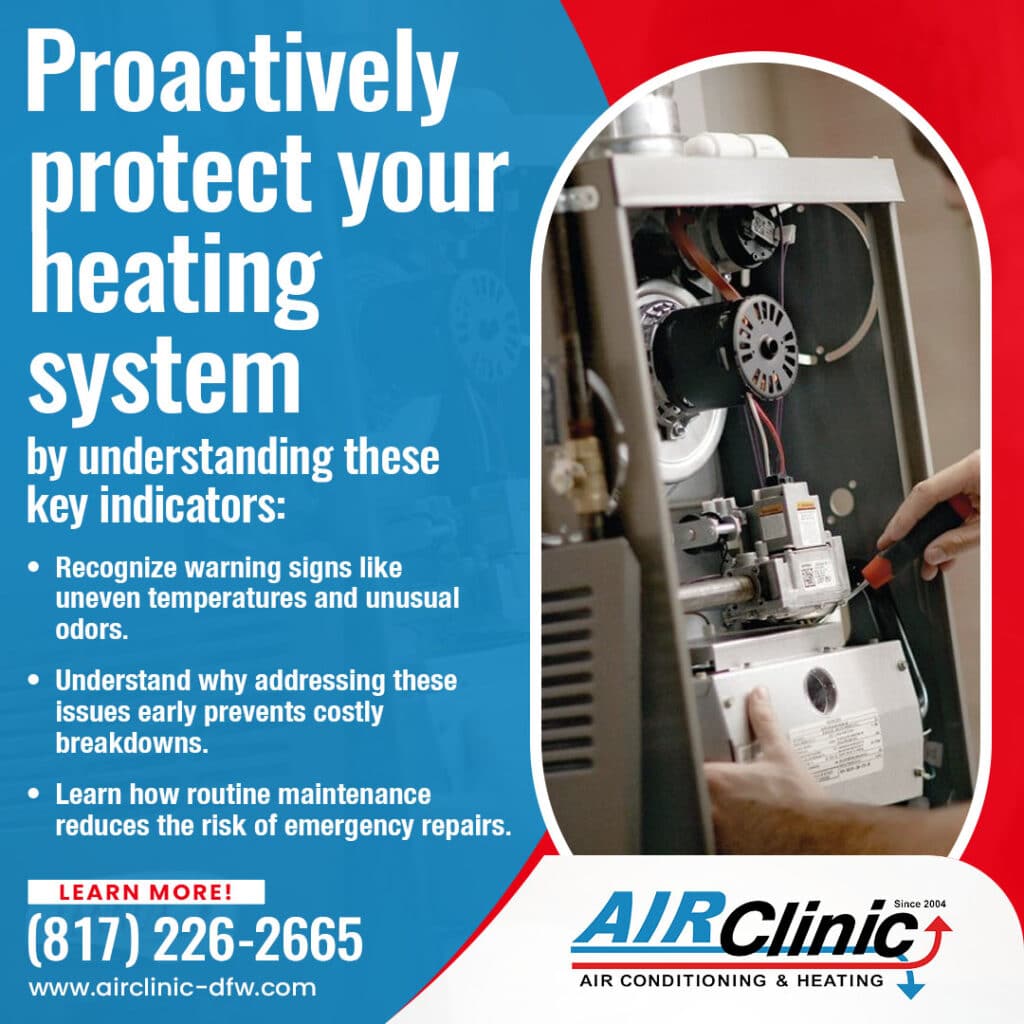
Emergency heating failures rarely happen without warning. Uneven temperatures, short cycling, unusual noises, persistent odors, and unexplained energy increases all signal rising risk.
Recognizing these signs early helps homeowners avoid sudden breakdowns and safety concerns.
We encourage Grand Prairie homeowners to monitor system behavior closely during winter. Early action protects comfort, reduces stress, and preserves system reliability. When concerns arise, Air Clinic provides straightforward assessments and practical solutions focused on long-term performance and household safety. Contact us today at (817) 226-2665 to learn more about our reliable heating repair services in Grand Prairie.