Texas storms often arrive with heavy rain, lightning activity, and unstable electrical conditions. After severe weather passes, many homeowners discover that their cooling systems are no longer operating properly. In many cases, sudden voltage fluctuations damage internal HVAC components without obvious warning signs. That is one reason calls for air conditioning repair increase significantly after major storms.
At Air Clinic, we regularly inspect systems that stop cooling properly after power interruptions or electrical surges. Some units fail immediately, while others continue operating with hidden damage that gradually affects performance. Understanding how storms impact HVAC equipment can help property owners recognize problems early, reduce repair costs, and avoid prolonged indoor discomfort during high temperatures in Arlington, Texas.
Why Power Surges Affect Cooling Systems So Quickly
Power surges occur when electrical voltage suddenly spikes above normal operating levels. Storm-related lightning strikes, damaged utility lines, and unstable grid conditions can all trigger these surges. Modern cooling systems contain sensitive electrical components that rely on stable voltage to function correctly. Even a short disruption can create long-term operational problems.
Outdoor condenser units are especially vulnerable because they connect directly to the home’s electrical supply. Capacitors, compressors, contactors, and control boards often absorb the initial impact. Once damaged, these parts may struggle to regulate cooling cycles efficiently.
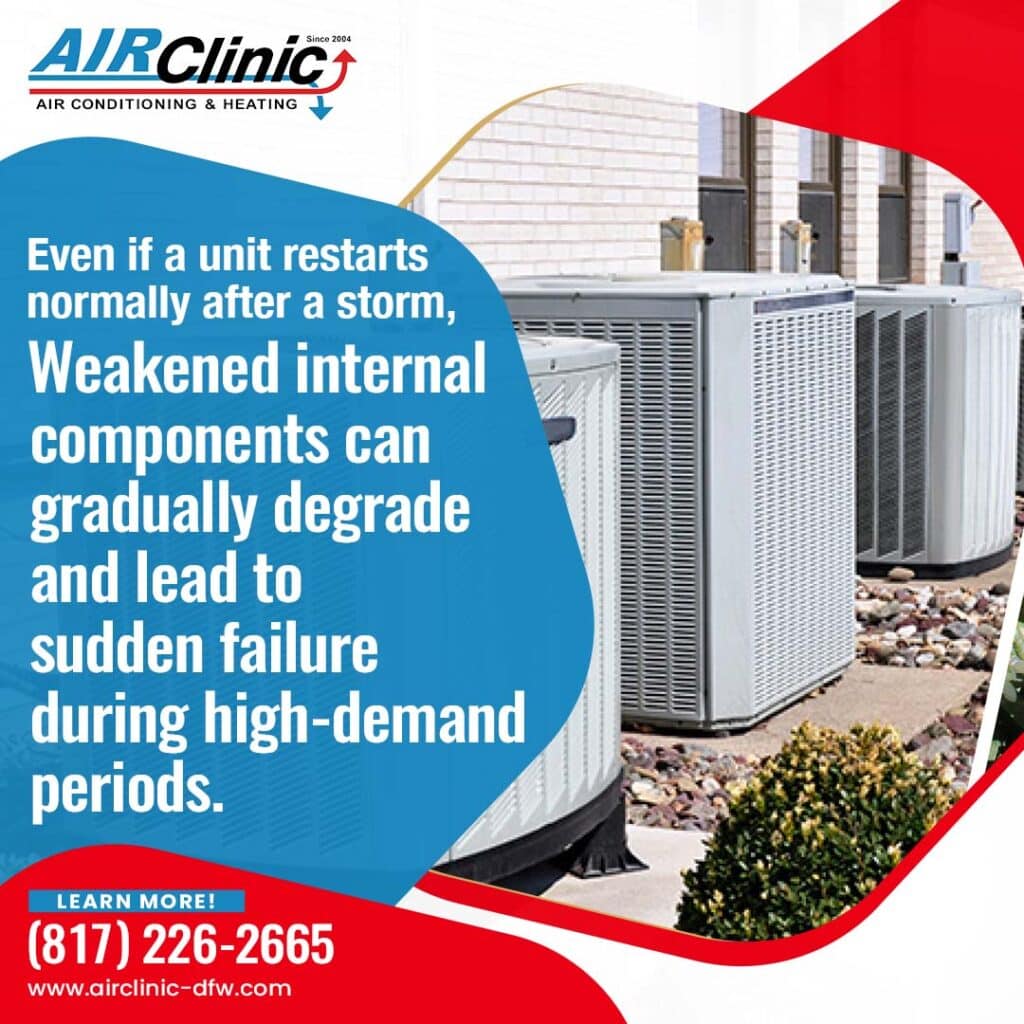
Many homeowners assume the unit is safe if it restarts after the storm. However, hidden electrical stress may continue affecting performance for days or weeks afterward. Systems may short-cycle, lose airflow efficiency, or struggle to maintain indoor temperatures consistently.
Common Electrical Components Damaged During Storms
Several HVAC parts frequently fail after sudden voltage spikes. Capacitors are among the most common because they help start and regulate motors. When damaged, the system may hum, struggle to turn on, or stop running entirely.
Control boards are another major concern. These electronic components manage communication between the thermostat and mechanical systems. A surge can disrupt those signals and cause inconsistent operation.
Compressors also face a serious risk. Since the compressor is responsible for circulating refrigerant through the system, damage can significantly reduce cooling capacity. In some situations, compressor replacement becomes necessary if the electrical overload is severe enough.
These types of failures often require immediate AC repair service to prevent additional damage during periods of extreme heat.
At Air Clinic, our technicians use advanced diagnostics to evaluate these failures accurately before recommending repairs. Early inspection often prevents additional strain on unaffected components.
Delayed Storm Damage Often Creates Misleading Symptoms
Not all post-storm HVAC problems appear immediately. Some systems continue running despite internal electrical damage. This delayed failure pattern often causes confusion because homeowners assume the storm was unrelated to later performance issues.
A weakened capacitor may continue operating temporarily before failing completely several days later. Similarly, partially damaged motors can overheat gradually as they work harder to maintain normal cooling cycles.
These situations often produce symptoms that appear unrelated to electrical damage, including:
- Uneven cooling
- Warm airflow from vents
- Higher indoor humidity
- Increased utility costs
- Repeated breaker trips
- Longer cooling cycles
Because these symptoms develop slowly, many homeowners delay calling for a professional inspection. Unfortunately, continued operation under electrical stress may worsen internal damage over time.
Research published in the International Journal of Environmental Research and Public Health highlights that aging HVAC systems often become more difficult to maintain efficiently due to declining component reliability and increased operational strain. Storm-related voltage issues can accelerate those problems significantly.
Warning Signs That Should Never Be Ignored
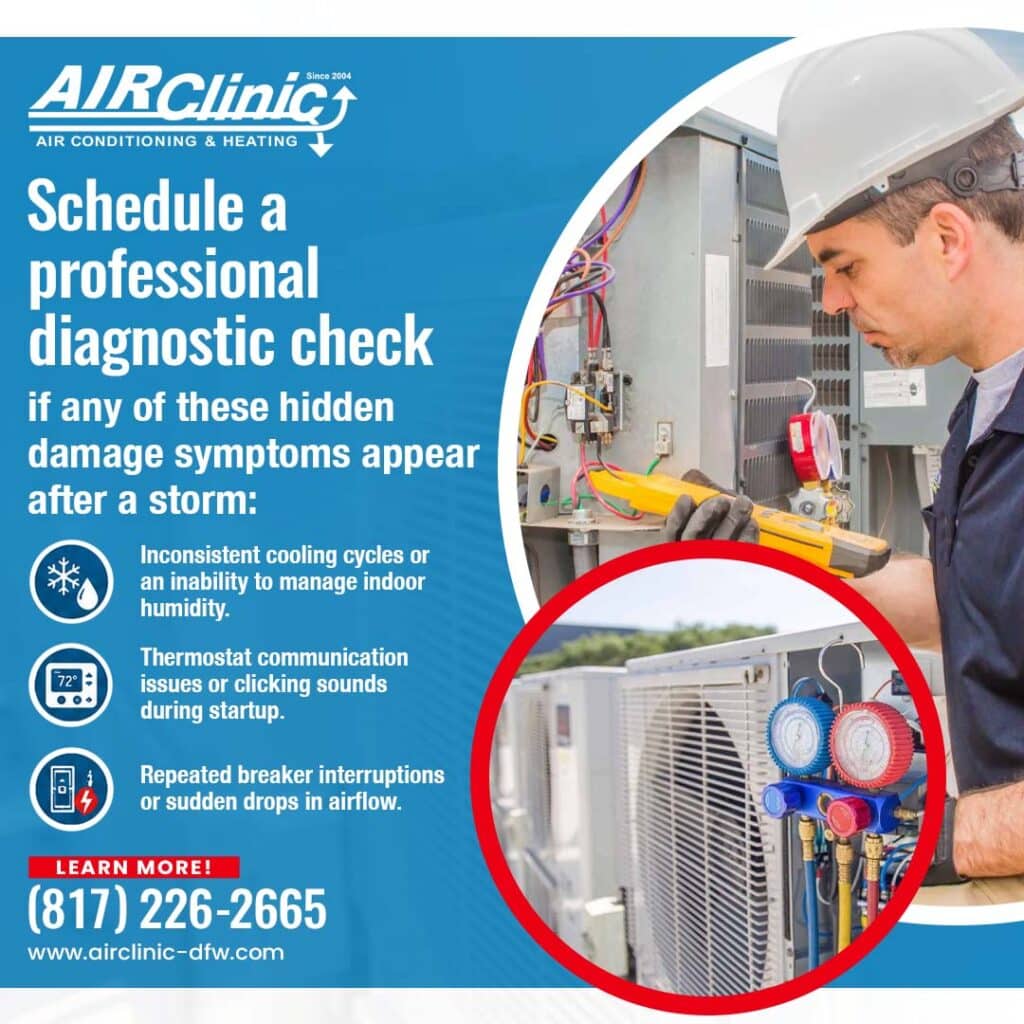
Several warning signs indicate the system may have suffered surge-related damage after severe weather. Burning odors, clicking noises, or inconsistent startup behavior often suggest electrical component failure.
Thermostat communication errors are also common after storms. If the thermostat appears functional but the system responds inconsistently, internal control damage may exist.
Another major indicator involves sudden airflow reduction. When blower motors or control boards experience voltage damage, airflow may weaken even though the unit still appears operational.
In Arlington, Texas, prolonged heat exposure places additional stress on compromised systems after storms pass. Delaying inspection under these conditions often increases the likelihood of secondary failures.
Scheduling early air conditioning repair in Arlington, Texas, can help identify electrical damage before cooling performance declines further.
Storm Season Places Additional Strain on Older HVAC Systems
Older HVAC systems generally experience greater vulnerability during unstable electrical conditions. Components naturally weaken over time, reducing their ability to withstand voltage fluctuations safely.
Electrical insulation inside motors deteriorates with age. Capacitors also lose efficiency after years of operation. During a sudden power surge, these aging components often fail faster than newer equipment.
Repeated air conditioning repair service history can also indicate elevated risk. Systems that already experience hard starts, refrigerant issues, or airflow problems may struggle to recover from sudden electrical stress.
At Air Clinic, we frequently evaluate systems that appeared functional before storms but later developed widespread electrical failures afterward. In many cases, storm exposure simply accelerates existing wear that was already affecting system reliability.
Why Preventive Protection Matters Before Severe Weather
Preventive measures can significantly reduce storm-related HVAC damage. Whole-home surge protectors help regulate incoming voltage spikes before they reach sensitive equipment.
Routine inspections also improve protection by identifying weakened electrical components early. Technicians can test capacitors, inspect wiring connections, and evaluate compressor performance before storm season intensifies.
Proper maintenance remains especially important for systems operating under heavy summer demand. Dirty coils, restricted airflow, and worn electrical parts increase overall stress during unstable weather conditions.
Our team provides preventive evaluations designed to identify these concerns before severe failures occur. These inspections often help homeowners avoid emergency breakdowns during peak heat periods in Arlington, Texas.
Fast Diagnostics Help Prevent Escalating Repair Costs
Post-storm HVAC problems often worsen when systems continue operating without proper inspection. Electrical damage rarely remains isolated to one component. A failing capacitor, for example, may place excessive strain on the compressor or blower motor.
Prompt diagnostics help identify those developing problems early. Advanced testing equipment allows technicians to evaluate voltage readings, motor performance, refrigerant operation, and electrical continuity accurately.
Research published in Energy Reports by Es-Sakali et al. (2022) found that proactive HVAC maintenance strategies can significantly reduce system breakdowns and shorten repair durations. Following major storms, early inspection of electrically stressed systems may help prevent escalating component failures.
At Air Clinic, we prioritize structured inspections because many surge-related problems remain invisible during quick visual evaluations. Detailed diagnostics improve repair accuracy and reduce unnecessary part replacement.
Our team also maintains 24/7 response availability because storm-related failures often occur outside standard business hours. Immediate service becomes especially important when indoor temperatures rise rapidly after cooling loss.
Real Experiences After Unexpected System Failures
We often hear from homeowners who discover hidden HVAC problems shortly after storms or sudden electrical interruptions. One customer, Lyndsay C., shared:
“Called the office and both Misty and Shanda were awesome to help coordinate maintenance on my unit. JJ came out and handled the maintenance on our system and luckily came when he did, because he noticed our outside unit fan motor had went out. He was able to make some calls and get the part the following day and came and installed it and had my home back up and running within 24 hours! Great service all the way around!”
Another homeowner, Alisa O., described her experience this way:
“I had a fantastic experience with Adam! He not only helped me with an HVAC issue at my home but also came out to a property I was selling to do a full tune-up for the new buyers. He was on time, professional, and extremely knowledgeable. He explained everything clearly, took care of the issue efficiently, and made the whole process stress-free. I highly recommend him to anyone needing HVAC service. You can count on him to do the job right!”
These experiences reflect how quickly small electrical or performance issues can escalate after severe weather when systems are not inspected promptly.
Why Reliable Service Matters After Severe Weather Events
Post-storm repair conditions often create high demand across the HVAC industry. During these periods, response times, accurate diagnostics, and quality replacement parts become especially important.
Systems exposed to voltage instability may require multiple component evaluations before the root problem becomes fully visible. Rushed inspections sometimes overlook hidden damage that later creates repeat breakdowns.
Many homeowners rely on professional air conditioning repair services during storm season because delayed diagnostics often lead to more extensive failures. Proper testing procedures help identify whether the issue involves electrical damage, refrigerant imbalance, airflow restriction, or thermostat communication failure.
Our technicians undergo extensive training to evaluate complex HVAC problems accurately. We also use quality replacement parts designed for long-term system reliability rather than temporary short-term fixes.
For homeowners in Arlington, Texas, rapid response becomes critical during extreme summer temperatures. Reliable repairs help restore indoor comfort while reducing the risk of additional equipment strain.
Key Takeaways
- Sudden power surges during storms can damage HVAC components even if the system appears to restart normally afterward.
- Capacitors, compressors, control boards, and blower motors are among the most commonly affected parts after electrical instability.
- Delayed symptoms such as weak airflow, higher energy bills, or inconsistent cooling may indicate hidden surge-related damage.
- Older HVAC systems often face greater risk because aging electrical components are less resistant to voltage fluctuations.
- Fast professional diagnostics can help prevent secondary damage and reduce the likelihood of larger repair expenses.
Protecting Your Cooling System After Severe Weather
Storm-related power surges can create serious HVAC problems long after severe weather ends. Some failures appear immediately, while others develop gradually through hidden electrical damage and declining system performance. Recognizing these warning signs early helps reduce repair costs and prevents extended cooling interruptions.
At Air Clinic, we focus on accurate diagnostics and reliable air conditioning repair in Arlington, Texas. We also provide preventive system evaluations designed to help homeowners maintain dependable indoor comfort during unpredictable Texas weather conditions. Contact us today at (817) 226-2665 to learn more.